A selection of ready-made portfolios (including ISAs), will be offered by some, enabling you to choose from a specified risk profile—typically categorized as low, medium, or high. You have the opportunity to invest up to £20,000 how to buy bitcoin safely annually in stocks (investment trusts), and funds, while importantly avoiding any capital gains tax and dividend tax on your investment returns. Utilizing a stocks and shares ISA is often the most effective way to begin your investment journey.
Diversification of your portfolio may also be achieved through investments in mutual funds and exchange-traded funds (ETFs), as they encompass a variety of securities from different industries or asset classes. Before establishing an investment account, the initial step is to clarify your investment goals and the timeframe in which you will require the funds. The multitude of options available can make the initial setup of an investment account and the execution of your first trades feel daunting. The regulation of foreign exchange markets is conducted under the Foreign Exchange Management Act, 1999. Financial markets and systems are overseen by the RBI through various laws. To engage in the Indian securities markets — Foreign Portfolio Investors must register with Designated Depository Participants (DDPs).
Prominent stock exchanges include the Nasdaq Exchange (the New York Stock Exchange (NYSE)), and over-the-counter (OTC) markets. Discover the advantages of our advanced tiers and open the door to a unique array of educational opportunities. EToro does not guarantee the accuracy or completeness of the information contained in this guide and accepts no liability regarding its content. Analyzing a business directly can be as valuable as attempting to interpret the graphs.
Buying stocks typically involves opening a brokerage account with an online or a traditional brokerage. With patience and a commitment to learning, you can confidently navigate the stock market and work towards achieving financial success. It provides an opportunity to grow wealth, generate income and work towards financial goals. When investing in stocks, it is crucial to consider the tax implications of your investment activities. Avoid concentrating too much of your capital in a single stock, as it can expose you to a higher level of risk. Investing an amount that you are comfortable with and aligns with your overall financial goals is essential.
- An ETF can hold hundreds or thousands of individual stocks — bonds, or other assets.
- A type of investment that pools shareholder money and invests it in a variety of securities.
- This guide offers a straightforward (step-by-step explanation of how the U.S. stock market functions), highlighting the associated risks and opportunities, along with practical strategies for confidently starting your investments.
- What you were comfortable with when you started might feel different a few years down the line.
- “It helped that the information was step by step and in plain English where anyone could understand. I had never read a thing about buying stock so I was glad I started here first.”…” more

The company’s bondholders will be paid first, then holders of preferred stock. If a company goes bankrupt and its assets are liquidated, common stockholders are the last in line to share in the proceeds. The very lowest priced stocks are known as “penny stocks.” These companies may have little or no earnings. Shares in very small companies are sometimes called “microcap” stocks.
- Keep in mind that funds in an IRA are generally inaccessible until you reach retirement age (except for certain exceptions or incurring a penalty) — so it’s advisable not to allocate all your savings into an IRA if you may need some before age 59 ½.
- If a lawyer who resisted this for years can learn it, so can you.
- If you place a market order trade “after hours” , after 4 p.m. EST,, when the markets have closed for the day, your order will be placed at the prevailing price when the exchanges next open for trading.
- Your risk tolerance , how much risk you can reasonably take on, and your time horizon (when you need to access your money) will define your investor profile.
Traditional retirement accounts may allow pre-tax contributions, while Roth accounts use after-tax dollars and may allow tax-free withdrawals if requirements are met. Interest (dividends), and capital gains may be taxable, depending on the type of income, holding period, and your personal tax situation. A brokerage account allows investors to buy and sell a wide range of investment products, including stocks, bonds, mutual funds, and exchange-traded funds.
What is the initial amount required to begin investing in U.S. stocks?
Responsible individual stock investing is time-consuming because it requires you to make judgments about a company’s management, its earnings, and its future prospects. However — there are so many ways to invest in stocks. You may accept or manage your choices by clicking below, including your right to object where legitimate interest is used, or at any time in the privacy policy page. You don’t have to know everything on day one—you just need a plan you can stick with.
But getting started can feel daunting for many beginners looking to get into the stock market despite the potential long-term gains. If you want easy access to your money or are just investing for a rainy day — you’ll probably want a standard brokerage account. The primary considerations are why you’re investing in stocks and how easily you want to access your money. It’s often called “interest on interest,” though with stocks it’s more like “returns on returns.” For example, if you invest $1,000 and earn 10% ($100), you’ll have $1,100. Don’t be intimidated – once you get the hang of a few key terms — you’ll be “speaking the language” of the market.
If you’re ready to invest, it’s easy to get started using an online investment platform. “Our tendency towards cash and our aversion to risk when it comes to investing could be holding people back from achieving their financial goals.” This guide will walk you through the key steps and strategies needed to start investing in the stock market with confidence. The key is to shift from an active trader’s mindset to that of a patient business owner.
Several factors come into play here (including your age), risk tolerance, and investment objectives. How you allocate your investable money is called asset allocation. First, let’s talk about the money you shouldn’t invest in stocks. Robo-advisors have exploded in popularity in recent years because they make investing accessible without requiring deep financial knowledge.
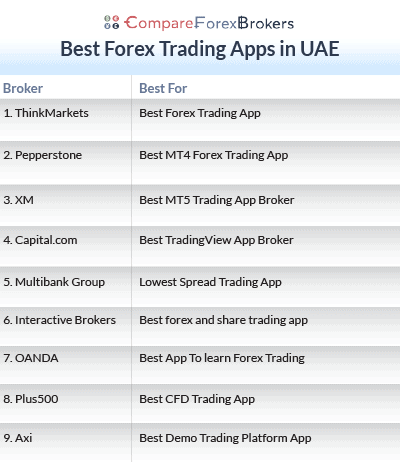
Global exchange markets are available in the Americas (Europe), and the Asia Pacific for clients to invest in over 200 nations and territories. The broker focuses on extensive market access, competitive pricing, and efficient trade execution. The platform also offers educational resources and a demo account feature, helping new users to learn and practice trading strategies without risk. Designed with user experience in mind, eToro’s platform is intuitive and user-friendly, suitable for both beginners and experienced traders. One of eToro’s hallmark features is its CopyTrading feature, allowing investors to automatically copy the trades of experienced users, effectively democratizing access to expert strategies. Furthermore, these brokers are easy to onboard even via your smartphones and are suitable beginner-friendly options.
Ensure that your investment objectives (time horizon and risk tolerance are aligned with investing in stocks), as they can lose value. Stock investments involve risk — including loss of principal. Selling options contracts involves significant risk, including the potential for losses far greater than the proceeds received from the sale of the options contract. Investing involves risk, including the risk of loss of principal. ETFs may trade at a discount to NAV — are subject to tracking/correlation risk and shareholders bear additional ETF expenses.
If your employer matches your contributions to that plan, you should invest enough to earn the full match before investing in stocks elsewhere. The two types of share markets you can trade are the Primary Share Market and the Secondary Share Market. Here is a guide on investing in the stock market for beginners to help you.

This section delves further into the available options and outlines the rationale for recommending ETFs as a starting point for novices. A market order is executed swiftly at the prevailing price—quick, straightforward, and suitable for most beginners. Typical ongoing fees for major index ETFs usually range from 0.03% to 0.20% annually. For most beginners, a broad-market index ETF is the recommended choice. Identity verification by most brokers is typically finalized within one to three business days.